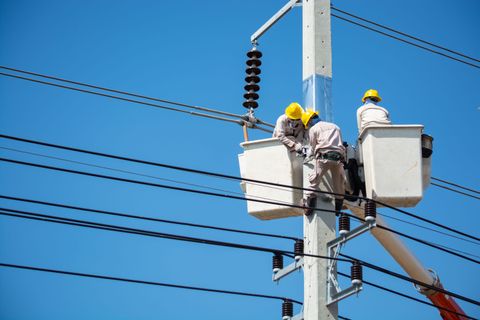
Electric Power Maintenance Guide: Essential Tips, Basics, and Best Practices
Electric power maintenance involves inspecting, testing, monitoring, and maintaining electrical equipment to support safe and reliable operation. It covers electrical panels, circuit breakers, transformers, cables, distribution boards, motors, generators, and other components used to distribute or consume electricity.
Electrical systems are essential to residential buildings, commercial facilities, manufacturing plants, hospitals, educational institutions, and public infrastructure. Equipment must operate within appropriate electrical limits to reduce the risk of unexpected failures, overheating, power interruptions, and electrical hazards.
Electric power maintenance includes preventive activities performed at scheduled intervals and corrective work undertaken when a fault or malfunction occurs. It may also involve condition monitoring, electrical testing, equipment documentation, and reviewing the performance of power distribution systems.
Understanding these fundamentals helps building managers, facility operators, business owners, and technical personnel recognize potential problems and establish appropriate maintenance procedures.
What Does Electrical Power Maintenance Include?
Electrical power maintenance covers several connected activities.
Visual inspections: Checking equipment for visible damage, corrosion, overheating, loose covers, or deteriorated insulation.
Preventive maintenance: Performing planned inspections and maintenance tasks before equipment develops serious problems.
Electrical testing: Measuring selected electrical characteristics to assess equipment condition and system performance.
Fault diagnosis: Identifying the causes of electrical problems, such as insulation deterioration, overloaded circuits, or defective components.
Power quality monitoring: Evaluating voltage variations, harmonics, frequency, and other characteristics that affect electrical equipment.
Documentation: Recording inspection findings, maintenance activities, test results, and corrective actions.
The exact maintenance requirements depend on equipment specifications, operating conditions, environmental factors, applicable regulations, and manufacturer recommendations.
Why Electric Power Maintenance Matters
Electrical maintenance is important because electrical faults can affect equipment, property, business continuity, and personal safety. A damaged cable, overloaded circuit, defective protective device, or deteriorated connection can create conditions that lead to overheating, electric shock, equipment damage, or fire.
Regular maintenance helps identify warning signs before they develop into more serious problems. However, inspections cannot eliminate every possible failure, so appropriate protective devices, emergency procedures, and qualified technical personnel remain essential.
Key Benefits of Preventive Electrical Maintenance
Improved electrical safety
Inspections can help identify damaged insulation, exposed conductors, defective protective equipment, and other conditions that may create hazards. Correcting these problems helps reduce electrical risks.
Greater equipment reliability
Electrical equipment operates under changing loads, temperatures, and environmental conditions. Scheduled maintenance can reveal deterioration that might otherwise remain unnoticed until a malfunction occurs.
Reduced unplanned interruptions
Electrical failures can interrupt manufacturing processes, building operations, lighting, communications, and other essential activities. Maintenance planning helps organizations identify equipment that requires attention before an unexpected interruption.
Better equipment performance
Loose connections, deteriorated components, and unsuitable operating conditions may contribute to inefficient operation. Appropriate inspection and corrective work can help restore equipment to its intended operating condition.
Longer equipment life
Maintaining equipment according to manufacturer guidance can help limit avoidable deterioration. Actual equipment life depends on design, usage, environmental conditions, maintenance quality, and other factors.
Improved maintenance planning
Documented inspections and test results help facility managers prioritize repairs, track recurring problems, and plan equipment replacement based on condition and operational requirements.
Common Electrical Maintenance Activities
| Activity | Main purpose | Typical equipment |
|---|---|---|
| Visual inspection | Identify visible damage or deterioration | Panels, cables, switchgear |
| Thermal inspection | Identify unusual temperature patterns | Connections, transformers, distribution boards |
| Insulation testing | Assess insulation condition | Cables, motors, electrical equipment |
| Protective device testing | Verify selected protective functions | Circuit breakers, relays |
| Power quality analysis | Examine electrical supply characteristics | Distribution systems, sensitive equipment |
| Grounding inspection | Assess grounding and bonding arrangements | Electrical installations |
| Connection inspection | Identify loose or deteriorated connections | Terminals, busbars, switchgear |
The table provides general examples rather than a universal maintenance schedule. Not every test is appropriate for every system, and some procedures require equipment shutdown or specialized instruments.
Electrical Maintenance Services and Preventive Practices
Electrical maintenance services generally involve planned inspections, condition assessments, testing, fault identification, and corrective maintenance. In commercial and industrial environments, these activities may be coordinated with facility management, production schedules, and electrical safety procedures.
A structured maintenance programme begins with an inventory of electrical assets. Each item should be identified by its location, function, operating requirements, maintenance history, and relevant technical documentation.
Developing a Preventive Maintenance Schedule
A preventive maintenance schedule establishes when equipment should be inspected and which activities should be performed.
The schedule should reflect:
Equipment type and manufacturer recommendations.
Operating hours and electrical loading.
Environmental conditions, including dust, moisture, heat, and vibration.
Equipment age and maintenance history.
Consequences of equipment failure.
Applicable electrical standards and regulatory requirements.
Findings from earlier inspections and tests.
For example, equipment operating in a dusty industrial environment may require a different inspection frequency from equipment installed in a clean, temperature-controlled room.
A maintenance schedule should not rely solely on calendar intervals. Inspection findings, equipment condition, operating changes, and manufacturer instructions may indicate that additional attention is necessary.
Essential Preventive Maintenance Practices
Maintain accurate equipment records. Keep electrical drawings, equipment identification details, inspection records, and test results in an organized location.
Inspect accessible equipment externally. Authorized personnel can check for visible damage, corrosion, unusual odors, signs of overheating, and damaged enclosures without exposing themselves to energized components.
Review protective devices. Circuit breakers, protective relays, and other safety devices should be inspected and tested according to applicable requirements and manufacturer instructions.
Monitor recurring faults. Repeated tripping, abnormal temperatures, flickering lights, or unexplained equipment shutdowns may indicate an underlying problem that needs investigation.
Keep electrical areas orderly. Maintain suitable access to panels and electrical equipment. Avoid storing combustible materials near electrical installations or blocking access to emergency controls.
Review maintenance findings. Corrective actions should be documented and verified rather than treating an inspection as complete simply because a report has been produced.
Electrical panels and exposed conductors should never be opened or handled by unqualified personnel. Work on electrical systems must be carried out using appropriate isolation procedures, protective equipment, and qualified staff.
Commercial Electrical Services: Maintenance for Buildings
Commercial electrical systems support offices, shopping centres, hotels, educational institutions, healthcare facilities, warehouses, and other buildings.
These installations may include lighting circuits, emergency lighting, distribution boards, lifts, HVAC equipment, backup generators, and electrical supplies for office technology.
Commercial electrical services can involve inspecting these systems, identifying faults, maintaining protective devices, and assessing whether existing installations remain suitable for the building's current requirements.
Important Commercial Maintenance Areas
Distribution boards and circuit protection: Distribution boards organize electrical circuits and contain protective devices. Inspection can identify damaged components, unsuitable circuit arrangements, and signs of overheating.
Lighting systems: Maintenance includes checking lighting performance, control systems, emergency lighting, and associated electrical components.
Backup power systems: Generators, batteries, and associated switching equipment may require scheduled inspection and testing to confirm their readiness for intended use.
Heating, ventilation, and air conditioning: HVAC equipment places electrical demands on buildings. Motor condition, control systems, and electrical connections can influence reliability.
Emergency electrical arrangements: Emergency lighting and designated backup systems should be maintained according to applicable safety requirements and the building's emergency plan.
Commercial facilities should also review electrical capacity when adding equipment, changing layouts, or increasing occupancy. An installation that was adequate for its original purpose may require reassessment after substantial changes.
Industrial Electrical Contractors and Power System Maintenance
Industrial electrical installations often involve higher power demands, specialized machinery, motor control systems, transformers, switchgear, and complex distribution networks.
Industrial electrical contractors may undertake installation, inspection, testing, fault diagnosis, equipment upgrades, and maintenance activities within their qualifications and contractual responsibilities.
Industrial environments present additional challenges because electrical equipment may operate continuously or under demanding conditions involving heat, dust, moisture, vibration, or corrosive substances.
Key Industrial Maintenance Priorities
Motors and drives: Motors, variable-frequency drives, and their control systems should be maintained according to equipment specifications. Abnormal vibration, overheating, or repeated protective trips may indicate a developing issue.
Transformers: Maintenance may include external inspection, checking cooling arrangements, reviewing protective devices, and conducting appropriate diagnostic tests.
Switchgear: Switchgear controls and isolates electrical circuits. Its maintenance requirements depend on its design, operating conditions, voltage level, and manufacturer guidance.
Industrial control panels: Panels may contain programmable controllers, relays, contactors, and other components. Maintenance should consider both electrical safety and the effects of interruptions on industrial processes.
Grounding and bonding: Appropriate grounding and bonding arrangements help support electrical safety and the intended operation of protective systems.
Load management: Reviewing demand and load distribution can help identify overloaded circuits, imbalanced phases, and opportunities to improve the arrangement of electrical equipment.
Why Maintenance Records Matter in Industrial Facilities
Industrial maintenance records provide a history of equipment performance and previous corrective actions. They can help technicians recognize recurring failures, identify deterioration patterns, and prioritize critical equipment.
A useful record typically includes the equipment identification, inspection date, observations, test results, identified defects, corrective measures, and the person responsible for the work.
Records should be accurate and accessible to authorized personnel. Changes to electrical installations should also be reflected in relevant drawings and technical documentation.
Electrical Testing and Inspection Services
Electrical testing and inspection services help determine whether an installation or component meets relevant requirements and operates within its intended parameters.
Inspection involves examining equipment, installation arrangements, and visible conditions. Testing involves measurements or controlled procedures used to assess electrical characteristics or protective functions.
The correct testing approach depends on the installation type, equipment specifications, operating voltage, and applicable standards.
Common Electrical Tests
Insulation resistance testing
This test evaluates the resistance of electrical insulation using an appropriate test instrument. Results can help identify insulation deterioration, but interpretation depends on equipment type, temperature, test voltage, and other conditions.
Continuity testing
Continuity tests help establish whether an intended electrical path is complete. They may be used when assessing conductors, bonding arrangements, and selected circuit connections.
Grounding and earthing tests
These tests assess relevant aspects of an installation's earthing arrangements. The appropriate method depends on the grounding system and the purpose of the assessment.
Protective device testing
Circuit breakers, residual-current devices, and protective relays may require testing to verify specified operating characteristics and protective functions.
Thermal imaging
Thermal imaging can identify unusual temperature patterns in suitable operating conditions. An abnormal temperature may indicate a problem, but additional investigation is usually needed to establish the cause.
Power quality measurements
Power quality measurements assess factors such as voltage variations, current characteristics, frequency, harmonics, and power factor.
Testing should be conducted by qualified personnel using appropriate instruments and procedures. Equipment may need to be isolated before certain tests, and some tests can damage equipment if performed incorrectly.
Electrical Power Distribution Services and System Reliability
Electrical power distribution involves delivering electricity from a supply source to the equipment and circuits that use it.
A distribution system may include transformers, switchgear, busbars, cables, distribution boards, protective devices, and metering equipment. Its design must reflect the required load, voltage level, fault protection, environmental conditions, and applicable electrical standards.
Electrical power distribution services can include system assessment, equipment installation, inspection, maintenance, load evaluation, and fault investigation.
Important Distribution System Considerations
Load distribution: Electrical loads should be distributed appropriately across circuits and phases in accordance with the system design.
Circuit protection: Protective devices must be selected and coordinated according to relevant design requirements so that faults can be interrupted safely.
Cable condition: Insulation damage, unsuitable cable sizing, mechanical stress, and environmental exposure can affect cable performance.
Transformer condition: Transformers require maintenance appropriate to their type, loading, cooling arrangements, and operating environment.
Grounding arrangements: Grounding and bonding should be assessed according to the installation design and applicable standards.
System documentation: Accurate single-line diagrams and equipment records help qualified personnel understand the distribution arrangement and plan maintenance activities.
Changes in building use or industrial production can increase electrical demand. Before additional equipment is connected, the installation's capacity and protective arrangements should be evaluated by a qualified electrical professional.
Electrical Power Quality Analysis: Basics and Benefits
Electrical power quality describes characteristics of the electrical supply that affect how equipment operates. A system may provide electricity but still experience voltage disturbances, harmonic distortion, or other conditions that affect sensitive equipment.
Power quality analysis uses suitable measuring instruments to identify and characterize these conditions.
Common Power Quality Problems
Voltage fluctuations: Changes in voltage may affect equipment operation, lighting performance, and sensitive electronic systems.
Voltage sags: A temporary reduction in voltage can cause some equipment to reset, stop, or operate incorrectly.
Voltage swells: A temporary increase in voltage may place additional stress on certain electrical components.
Harmonic distortion: Harmonics are frequency components that differ from the fundamental supply frequency. They can arise from non-linear loads such as certain electronic power supplies and variable-speed drives.
Power factor issues: Power factor describes the relationship between real power and apparent power. A low power factor may increase current demand for a given amount of real power.
Phase imbalance: Unequal phase voltages or loads can affect the operation and heating of three-phase equipment.
How Power Quality Analysis Helps
Power quality analysis can help identify the source of recurring equipment disturbances, establish baseline operating conditions, and evaluate whether corrective measures are appropriate.
For example, a facility experiencing repeated shutdowns of sensitive equipment may use power quality monitoring to investigate voltage disturbances or harmonics. The results can help qualified personnel determine whether the issue relates to the electrical supply, internal distribution system, connected equipment, or a combination of factors.
Corrective measures must be based on measured conditions and sound engineering analysis. Installing additional equipment without identifying the underlying problem may not address the cause.
Recent Developments in Electrical Maintenance
Electrical maintenance continues to evolve through improvements in monitoring, diagnostic instruments, automation, and energy management. The following developments illustrate important directions during 2025 and 2026.
Condition-Based and Predictive Maintenance
Condition-based maintenance uses information about the actual state of equipment to determine when attention is needed. Measurements may include temperature, vibration, electrical current, insulation characteristics, or other relevant indicators.
Predictive maintenance uses condition data and analytical methods to estimate when equipment may require intervention. Its effectiveness depends on reliable data, appropriate models, and accurate interpretation.
These approaches can supplement scheduled maintenance, particularly in facilities where equipment failure has significant operational consequences. They do not eliminate the need for inspections or manufacturer-recommended maintenance.
Smart Sensors and Remote Monitoring
Sensors and connected monitoring systems can provide information about electrical loads, temperature, equipment status, and selected operating conditions.
Remote monitoring may help technical teams identify abnormal readings without conducting a physical inspection for every measurement. However, sensor accuracy, communications reliability, access controls, and cybersecurity must be considered.
Remote readings also have limitations. They may not reveal every physical defect, and unusual measurements often require additional investigation.
Energy Efficiency and Electrical System Assessment
Organizations continue to assess electricity consumption, equipment performance, and load patterns as part of broader energy management activities.
Electrical maintenance can support these assessments by identifying deteriorated components, reviewing power factor, and investigating avoidable losses where appropriate.
Energy performance depends on many factors, including equipment design, operating schedules, loading, and the wider electrical system. Maintenance findings should therefore be interpreted within the context of the facility's actual operating conditions.
Electrical Safety and Regulatory Requirements in India
Electrical installations in India are governed by applicable legislation, technical standards, and safety requirements. The relevant obligations depend on the type of installation, voltage level, location, and nature of the work.
Electricity Act, 2003
The Electricity Act, 2003, establishes an important legal framework for India's electricity sector, including generation, transmission, distribution, and electricity use. It also provides the basis for various regulatory and safety arrangements.
Central Electricity Authority Safety Regulations
The Central Electricity Authority (CEA) issues technical regulations concerning electrical safety and related matters. The Central Electricity Authority (Measures relating to Safety and Electric Supply) Regulations, 2023, establish requirements relevant to safe electrical installations and the supply and use of electricity.
Electrical maintenance must be performed in accordance with applicable requirements, including relevant provisions for authorized personnel, safe working practices, earthing, and inspection.
Electrical Standards and Qualified Personnel
Applicable Indian Standards, equipment specifications, and technical guidance can inform the design, inspection, testing, and maintenance of electrical installations.
Electrical work should be assigned to personnel with the appropriate qualifications and authorization. Requirements may vary according to the type of work and the relevant state or regulatory framework.
Essential Electrical Safety Practices
Isolate equipment and verify the absence of voltage before work where required.
Apply appropriate lockout and tagging procedures to prevent unintended energization.
Use suitable protective equipment and correctly rated test instruments.
Maintain safe access to electrical panels and emergency controls.
Follow equipment-specific instructions and applicable safety procedures.
Keep records of inspections, tests, defects, and corrective actions.
Never attempt electrical repairs without the necessary training and authorization.
Electrical work can be dangerous even when equipment appears switched off. Isolation, testing, and other safety procedures must be performed by qualified personnel using methods appropriate to the installation.
Frequently Asked Questions
1. What is electric power maintenance?
Electric power maintenance involves inspecting, testing, monitoring, and maintaining electrical equipment to support safe and reliable operation. It can include distribution boards, transformers, cables, circuit breakers, motors, and protective devices.
2. How often should electrical equipment be inspected?
Inspection frequency depends on equipment type, operating conditions, manufacturer recommendations, applicable regulations, and the consequences of failure. A qualified professional should establish an appropriate maintenance schedule for the installation.
3. What is the difference between preventive and corrective maintenance?
Preventive maintenance consists of planned activities intended to identify or reduce the likelihood of faults. Corrective maintenance addresses a defect or malfunction that has already been identified.
4. Why is electrical power quality analysis important?
Power quality analysis helps identify voltage disturbances, harmonic distortion, phase imbalance, and other electrical conditions that may affect equipment performance. Measurements help technical personnel investigate problems and evaluate appropriate corrective measures.
5. Who should perform electrical testing and inspection?
Electrical testing and inspection should be performed by appropriately qualified and authorized personnel using suitable instruments and procedures. The required qualifications and authorizations depend on the work, installation, and applicable regulations.
Conclusion
Electric power maintenance is an important part of managing electrical safety, equipment reliability, and operational continuity. Preventive inspections, appropriate testing, accurate documentation, and timely corrective action help identify developing problems and support informed maintenance decisions.
Commercial buildings and industrial facilities have different electrical requirements, but both benefit from maintenance procedures that reflect equipment specifications, operating conditions, and applicable safety rules.
Electrical testing, power distribution assessments, and power quality analysis provide additional information about system condition and performance. New monitoring technologies can complement these activities when implemented with appropriate technical oversight and cybersecurity measures.
In India, electrical maintenance must also account for applicable legislation, CEA safety regulations, technical standards, and requirements for qualified personnel. A structured maintenance programme that combines sound engineering practices with documented safety procedures helps support the safe and reliable operation of electrical systems.

Related Post...
Electric Power Maintenance Guide: Essential Tips, Basics, and Best Practices
Updated: October 28, 2026
Read More