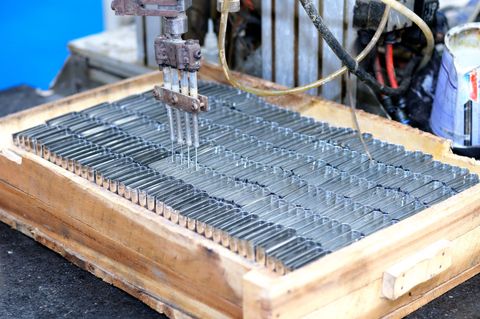
Semiconductor Company Guide: Explore Industry Types, Technologies, and Key Insights
Semiconductors are essential components of modern electronic systems. They are used in smartphones, computers, automobiles, medical equipment, communication networks, industrial machinery, and many other technologies. Their ability to control the flow of electrical current makes them important for processing information, storing data, and managing electronic functions.
A semiconductor company generally works in one or more areas of the semiconductor value chain. These activities may include chip design, wafer processing, fabrication, equipment development, packaging, testing, and integrated circuit manufacturing.
The semiconductor industry includes several types of companies with different technical capabilities and business models. Some organisations develop chip architectures, while others manufacture semiconductor devices or produce specialised equipment used in fabrication facilities.
Understanding semiconductor manufacturing companies, semiconductor equipment manufacturers, and semiconductor technology solutions provides useful insight into how electronic components are developed and produced.
What Is a Semiconductor Company?
A semiconductor company is an organisation involved in designing, developing, manufacturing, testing, or supplying technologies related to semiconductor devices.
Semiconductor devices are made using materials that have electrical conductivity between conductors and insulators. Silicon is the most widely used material in semiconductor manufacturing, although other materials such as silicon carbide, gallium nitride, and gallium arsenide are important for specific applications.
Semiconductor companies contribute to different stages of electronic product development.
Their activities may include:
Designing microprocessors and memory chips.
Developing integrated circuits for electronic devices.
Manufacturing semiconductor wafers.
Producing fabrication equipment.
Developing materials used in chip production.
Packaging and testing semiconductor components.
Creating specialised chips for automotive and industrial applications.
These organisations operate within a highly technical ecosystem that connects material suppliers, equipment manufacturers, chip designers, fabrication facilities, and electronics companies.
Importance of Semiconductor Industry Companies
Semiconductor industry companies play an important role in the development of modern technology. Their products and manufacturing capabilities support several sectors.
Consumer Electronics
Smartphones, televisions, laptops, tablets, cameras, and wearable devices depend on semiconductor components. Processors, memory chips, sensors, and power management circuits help these products perform their functions.
Artificial Intelligence
Artificial intelligence systems require substantial computing resources. Semiconductor companies develop processors, accelerators, memory technologies, and specialised integrated circuits that support AI training and inference.
Automotive Technology
Modern vehicles use semiconductor components for engine management, safety systems, navigation, infotainment, electric powertrains, and driver-assistance technologies.
Telecommunications
Mobile networks, wireless communication systems, routers, and data centres depend on semiconductor devices. These components help process signals and manage high-speed data transmission.
Healthcare Equipment
Medical imaging systems, patient monitoring devices, laboratory instruments, and diagnostic equipment use specialised semiconductor technologies.
Industrial Automation
Factories and industrial facilities use semiconductor components in robotics, sensors, motor controllers, automation systems, and monitoring equipment.
Major Types of Semiconductor Companies
The semiconductor ecosystem includes different categories of organisations. Each category performs specialised activities within the development and production of semiconductor devices.
Semiconductor Chip Design Companies
Chip design companies develop the architecture and electronic structure of semiconductor devices. Their work includes defining processor functions, circuit layouts, memory arrangements, and power requirements.
Some companies design their own chips and rely on external fabrication facilities to manufacture them. This business model is commonly known as the fabless semiconductor model.
Key activities include:
Processor architecture development.
Integrated circuit design.
Memory controller development.
Graphics processing architecture.
AI accelerator design.
Chip verification and validation.
Chip design companies use specialised electronic design automation tools to develop and test semiconductor layouts before physical manufacturing begins.
Semiconductor Fabrication Companies
Semiconductor fabrication companies manufacture chips using specialised production facilities known as fabrication plants or fabs.
The manufacturing process involves several stages, including wafer preparation, deposition, lithography, etching, doping, cleaning, and inspection.
These companies operate complex facilities that require highly controlled environments and advanced manufacturing equipment.
Important activities include:
Silicon wafer processing.
Photolithography.
Thin-film deposition.
Etching and pattern formation.
Ion implantation.
Wafer inspection.
Process monitoring.
Fabrication companies may manufacture chips designed by external customers or produce their own semiconductor products.
Semiconductor Equipment Manufacturers
Semiconductor equipment manufacturers develop the machinery and systems required for semiconductor fabrication, inspection, measurement, and packaging.
Their equipment supports different stages of chip manufacturing and helps maintain precision throughout production.
Major equipment categories include:
Lithography systems.
Wafer deposition equipment.
Etching machines.
Ion implantation systems.
Wafer cleaning equipment.
Inspection and metrology systems.
Semiconductor packaging equipment.
The performance of manufacturing equipment influences production accuracy, process consistency, and the ability to develop advanced semiconductor technologies.
Integrated Circuit Manufacturers
Integrated circuit manufacturers produce electronic circuits containing multiple components integrated onto a single semiconductor substrate.
An integrated circuit may contain transistors, resistors, capacitors, and other electronic elements.
Common integrated circuit categories include:
Microprocessors.
Microcontrollers.
Memory circuits.
Analog integrated circuits.
Digital signal processors.
Power management integrated circuits.
Radio-frequency integrated circuits.
Integrated circuits are used in computers, communication systems, consumer electronics, automotive electronics, and industrial equipment.
Semiconductor Packaging and Testing Companies
After semiconductor wafers are processed, individual chips must be separated, packaged, and tested before they can be incorporated into electronic products.
Packaging protects semiconductor dies and provides electrical connections to external circuits.
Testing helps verify whether a chip meets its intended functional and performance requirements.
Important activities include:
Wafer probing.
Die separation.
Chip packaging.
Electrical testing.
Thermal testing.
Reliability assessment.
Final quality inspection.
Packaging technologies have become increasingly important as modern electronic systems require higher computing performance and smaller physical designs.
Semiconductor Materials Companies
Semiconductor materials companies produce the specialised materials used throughout chip manufacturing.
These materials include silicon wafers, photoresists, deposition chemicals, gases, polishing compounds, and packaging materials.
Common material categories include:
Silicon wafers.
Silicon carbide substrates.
Gallium nitride materials.
Photoresist chemicals.
Specialty process gases.
Chemical mechanical polishing materials.
Advanced packaging substrates.
Material consistency and purity are important because even small impurities can affect semiconductor manufacturing processes.
Leading Semiconductor Companies and Their Industry Roles
Several internationally recognised organisations contribute to semiconductor design, manufacturing, equipment development, and materials production.
The following examples illustrate different roles within the industry rather than presenting a ranking.
Company | Main Industry Role | Key Area |
|---|---|---|
Intel | Integrated device manufacturing and chip development | Processors and semiconductor fabrication |
Taiwan Semiconductor Manufacturing Company (TSMC) | Semiconductor foundry | Advanced chip manufacturing |
Samsung Electronics | Integrated device manufacturing | Memory and logic semiconductors |
NVIDIA | Fabless semiconductor design | GPUs and AI computing |
AMD | Fabless semiconductor design | CPUs and GPUs |
Qualcomm | Semiconductor design | Mobile and wireless technologies |
ASML | Semiconductor equipment manufacturing | Lithography systems |
Applied Materials | Semiconductor equipment manufacturing | Deposition and materials engineering |
Lam Research | Semiconductor equipment manufacturing | Etching and deposition |
Micron Technology | Semiconductor manufacturing | Memory technologies |
These companies demonstrate how specialised organisations contribute to different parts of the semiconductor value chain.
Semiconductor Technologies and Their Applications
Semiconductor technology continues to develop as electronic devices require improved processing capabilities, energy efficiency, reliability, and smaller physical dimensions.
Advanced Process Nodes
Semiconductor process nodes describe generations of manufacturing technology. Advanced process technologies allow manufacturers to develop increasingly sophisticated chip designs.
Smaller process nodes can support higher transistor density and improved performance characteristics, although actual results depend on chip architecture, manufacturing processes, and design choices.
Advanced manufacturing involves complex lithography, deposition, etching, and measurement technologies.
Artificial Intelligence Semiconductor Technology
Artificial intelligence has increased demand for specialised computing hardware.
AI semiconductor technologies include:
Graphics processing units.
Neural processing units.
AI accelerators.
High-bandwidth memory.
Specialised inference processors.
High-speed networking chips.
These technologies are used in data centres, autonomous systems, robotics, cloud computing, and other AI applications.
Power Semiconductor Technology
Power semiconductors control and convert electrical energy in electronic systems.
They are widely used in electric vehicles, renewable energy installations, industrial equipment, charging infrastructure, and power supplies.
Important semiconductor materials include silicon, silicon carbide, and gallium nitride.
Silicon carbide and gallium nitride can provide advantages in particular high-voltage or high-frequency applications, depending on system requirements.
Memory Semiconductor Technology
Memory semiconductors store information for computers, mobile devices, servers, and electronic systems.
Common memory categories include:
DRAM: Used as working memory in computers and other electronic devices.
NAND Flash: Used in solid-state storage devices and memory cards.
NOR Flash: Used in certain embedded systems and firmware applications.
High-Bandwidth Memory: Used in applications requiring high data transfer rates.
Memory technology is important for computing performance, data storage, and AI systems.
Compound Semiconductor Technology
Compound semiconductors are made using combinations of different elements rather than a single semiconductor material.
Examples include gallium arsenide, gallium nitride, and silicon carbide.
These materials are used in specialised applications involving high-frequency communication, power conversion, optical systems, and high-temperature environments.
Semiconductor Manufacturing Process Explained
Semiconductor manufacturing involves a sequence of highly controlled operations. The exact process depends on the type of chip and its intended application.
Silicon Wafer Preparation
Manufacturing generally begins with a semiconductor wafer. Silicon crystals are processed into thin circular wafers that provide the foundation for chip production.
The wafers are polished and cleaned to achieve the required surface quality.
Photolithography
Photolithography transfers circuit patterns onto the wafer using light-sensitive materials and specialised optical systems.
This process helps define the locations of different semiconductor structures.
Deposition
Deposition adds thin layers of materials to the wafer surface. These layers may serve electrical, insulating, or structural purposes.
Different deposition techniques are selected according to material properties and manufacturing requirements.
Etching
Etching removes selected material from the wafer to create the desired patterns and structures.
It can use chemical solutions or plasma-based techniques.
Doping and Ion Implantation
Doping introduces controlled impurities into semiconductor materials to change their electrical properties.
Ion implantation is one method used to introduce these impurities with specific energy and concentration levels.
Inspection and Measurement
Manufacturers use inspection and metrology systems to identify defects and measure important manufacturing characteristics.
These checks help maintain process consistency.
Packaging and Testing
After wafer processing, individual chips are separated and packaged. Electrical and functional tests help determine whether the devices meet their design requirements.
Semiconductor Technology Solutions Across Industries
Semiconductor technology solutions support a broad range of modern applications. Their design and performance requirements differ according to the industry in which they are used.
Industry | Semiconductor Applications | Main Purpose |
|---|---|---|
Automotive | Microcontrollers, power chips, sensors | Vehicle electronics and control systems |
Healthcare | Imaging processors, sensors | Medical equipment and monitoring |
Telecommunications | RF chips, network processors | Wireless communication |
Data Centres | CPUs, GPUs, memory | Data processing and storage |
Industrial | Power semiconductors, controllers | Automation and machinery |
Consumer Electronics | Processors, memory, display drivers | Electronic device functions |
Renewable Energy | Power conversion semiconductors | Energy management |
The growing use of connected devices and automated systems continues to expand the range of applications supported by semiconductor technologies.
Factors to Consider When Evaluating Semiconductor Companies
Understanding a semiconductor company's capabilities requires examining more than its product catalogue. Several factors can provide insight into its technical position and operational activities.
Technology Capabilities
Examine the company's areas of specialisation, such as chip design, fabrication, packaging, memory, power electronics, or equipment development.
Manufacturing Infrastructure
For manufacturing-focused organisations, production facilities, process technologies, and manufacturing capabilities are important considerations.
Research and Development
Research and development activities support improvements in chip architecture, production processes, materials, and electronic performance.
Quality and Reliability
Semiconductor devices often operate in systems where consistent performance is important. Testing procedures, reliability assessment, and quality management are therefore relevant.
Industry Applications
Review the sectors served by the company, including automotive, computing, telecommunications, healthcare, and industrial automation.
Supply Chain Capabilities
Semiconductor production depends on a global network of materials suppliers, equipment manufacturers, fabrication facilities, and packaging organisations.
Understanding these relationships can help explain a company's role within the wider industry.
Semiconductor Industry Trends and Recent Developments (2025–2026)
The semiconductor industry continues to experience changes driven by artificial intelligence, advanced computing, manufacturing investment, and new electronic applications.
Growing Demand for AI Chips
AI computing has increased the importance of high-performance processors, graphics processing units, specialised accelerators, and advanced memory.
Data centres require semiconductor systems capable of handling large workloads and high-speed data movement.
Advanced Packaging Development
Traditional chip manufacturing is increasingly complemented by advanced packaging technologies.
Methods such as chiplets, 2.5D integration, and 3D stacking allow multiple semiconductor components to be combined into sophisticated electronic systems.
These approaches can help address performance, space, and connectivity requirements.
Expansion of Semiconductor Manufacturing Capacity
Countries and companies continue to focus on strengthening semiconductor manufacturing capabilities.
New fabrication facilities and production investments are intended to improve supply chain resilience and support demand from automotive, computing, telecommunications, and industrial sectors.
Growth of Automotive Semiconductors
Electric vehicles, advanced driver-assistance systems, and connected vehicle technologies require different types of semiconductor devices.
Power management chips, microcontrollers, sensors, and communication components are important in modern vehicle electronics.
Increasing Importance of Silicon Carbide and Gallium Nitride
Wide-bandgap materials are receiving attention because of their characteristics in power electronics and high-frequency applications.
Silicon carbide and gallium nitride are used in selected applications involving electric vehicles, power conversion, charging systems, and telecommunications.
Focus on Energy Efficiency
As semiconductor systems become more powerful, energy consumption and heat management are important engineering considerations.
Manufacturers and designers are exploring improved chip architectures, packaging methods, and materials to support more efficient electronic systems.
Semiconductor Industry in India
India is developing its semiconductor ecosystem through government initiatives, industrial investment, technical education, and partnerships with international technology companies.
The country's semiconductor development activities include chip design, electronics manufacturing, semiconductor research, and plans for domestic fabrication and packaging capabilities.
India Semiconductor Mission
The India Semiconductor Mission was established to support the development of India's semiconductor and display manufacturing ecosystem.
It forms part of the government's broader efforts to strengthen domestic electronics production and attract semiconductor-related investment.
Semiconductor Design Capabilities
India has an established presence in semiconductor design and engineering activities. Technical professionals contribute to chip architecture, verification, embedded systems, electronic design automation, and related research.
These capabilities are important because semiconductor development requires specialised engineering knowledge.
Semiconductor Manufacturing and Packaging
Semiconductor fabrication and assembly, testing, marking, and packaging are important areas of development in India.
Packaging and testing facilities can support the semiconductor supply chain by preparing manufactured chips for integration into electronic products.
Importance of Technical Education
Semiconductor development requires knowledge of electronics, electrical engineering, materials science, computer engineering, physics, and manufacturing processes.
Universities and technical institutions play an important role in preparing professionals for this specialised industry.
Challenges Faced by Semiconductor Companies
Despite technological progress, semiconductor companies face several technical and operational challenges.
High Manufacturing Complexity: Semiconductor production requires specialised facilities, advanced equipment, precise process control, and highly trained personnel.
Supply Chain Dependencies: Manufacturing depends on materials, machinery, chemicals, and components sourced from different regions.
Technology Development Requirements: Developing advanced semiconductor technologies involves extensive research, testing, and engineering resources.
Equipment Limitations: Advanced fabrication requires highly specialised equipment that can be difficult to develop, manufacture, and maintain.
Skilled Workforce Requirements: Semiconductor design and production require professionals with specialised technical knowledge.
Quality and Reliability Demands: Even small manufacturing defects can affect chip performance, making inspection and testing essential.
Geopolitical and Regulatory Factors: International trade rules, export controls, and government policies can influence semiconductor manufacturing and supply chains.
Laws, Policies, and Standards Related to the Semiconductor Industry
Semiconductor companies operate within regulatory frameworks that may cover manufacturing, environmental protection, workplace safety, intellectual property, product quality, and international trade.
In India, several important legal and policy areas are relevant.
India Semiconductor Mission: This government initiative supports the development of domestic semiconductor and display manufacturing capabilities through approved programmes and investment-related support.
Semiconductor and Electronics Manufacturing Policies: Central and state-level policies may provide frameworks for manufacturing infrastructure, investment, research, and industrial development.
Environment Protection Act, 1986: Semiconductor manufacturing facilities must consider applicable environmental requirements, including rules concerning industrial emissions, waste management, and pollution control.
Water and Air Pollution Regulations: Relevant provisions of the Water (Prevention and Control of Pollution) Act, 1974, and the Air (Prevention and Control of Pollution) Act, 1981, may apply to industrial facilities.
Intellectual Property Laws: Semiconductor companies use patents, copyrights, trade secrets, and other intellectual property protections to protect designs, technologies, and technical developments.
International Trade Regulations: Semiconductor equipment and technologies may be subject to export controls and other trade requirements in different countries.
Applicable requirements depend on the organisation's activities, facility location, technology, and business relationships.
Frequently Asked Questions (FAQs)
1. What do semiconductor manufacturing companies do?
Semiconductor manufacturing companies produce electronic chips using specialised processes such as photolithography, deposition, etching, doping, inspection, and wafer processing. Their products are used in computers, vehicles, communication equipment, and industrial systems.
2. What is the difference between a semiconductor company and a chip manufacturer?
A semiconductor company may work in chip design, manufacturing equipment, materials, fabrication, packaging, or testing. A chip manufacturer specifically focuses on producing semiconductor devices.
3. Who are semiconductor equipment manufacturers?
Semiconductor equipment manufacturers develop machinery used in chip production. Their products include lithography systems, deposition equipment, etching machines, inspection tools, and wafer processing systems.
4. What are integrated circuit manufacturers?
Integrated circuit manufacturers produce electronic circuits containing multiple components on a semiconductor substrate. Examples include microprocessors, memory chips, microcontrollers, and analog circuits.
5. Which industries depend on semiconductor technology?
Automotive, telecommunications, healthcare, consumer electronics, industrial automation, renewable energy, and data centre industries all depend on semiconductor components.
6. What materials are used in semiconductor manufacturing?
Silicon is the most widely used semiconductor material. Other materials include silicon carbide, gallium nitride, and gallium arsenide, which are used in particular electronic applications.
7. Why is semiconductor manufacturing important in India?
Semiconductor manufacturing can strengthen India's electronics ecosystem, support technological development, improve domestic production capabilities, and contribute to specialised engineering and industrial activities.
Conclusion
Semiconductor companies are essential to the development of modern electronic systems. Their activities cover chip design, semiconductor fabrication, equipment manufacturing, integrated circuit production, materials development, packaging, and testing.
Different types of semiconductor industry companies contribute specialised capabilities to the global supply chain. Semiconductor equipment manufacturers develop the machinery needed for chip production, while fabrication companies process wafers and integrated circuit manufacturers produce electronic components for a wide range of applications.
Technologies such as artificial intelligence processors, advanced packaging, memory systems, and power semiconductors continue to influence industry development. In India, semiconductor initiatives, technical education, and manufacturing investments are also contributing to the growth of the domestic ecosystem.
Understanding semiconductor manufacturing companies, semiconductor technology solutions, and their industrial applications provides a useful foundation for learning about one of the most important sectors in modern technology.
Disclaimer: This article is intended for general informational and educational purposes only. It does not constitute technical, legal, financial, or professional advice. It does not promote or guarantee any particular company, product, technology, or outcome.

Related Post...
Semiconductor Company Insights: A Complete Guide to Types, Applications, and Industry Trends
Updated: November 26, 2026
Read More
Chip Manufacturing Machines Guide: Learn About Advanced Production Technologies
Updated: November 25, 2026
Read More
Semiconductor Industry Overview: Learn About Leading Companies, Manufacturing, and Technologies
Updated: November 26, 2026
Read More