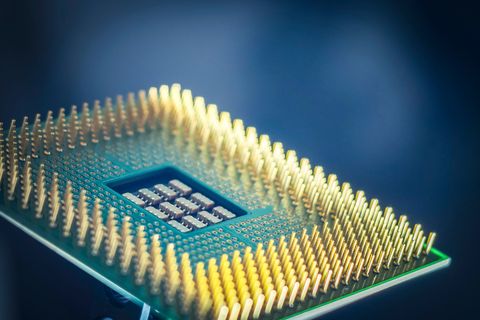
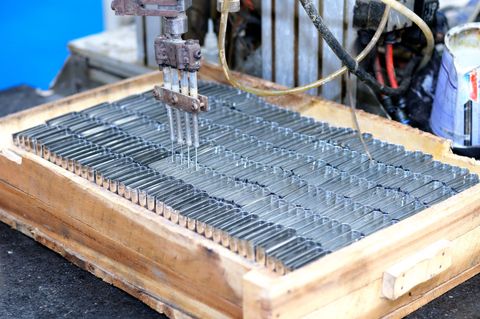
Semiconductor Company Insights: A Complete Guide to Types, Applications, and Industry Trends
Semiconductors are essential components of modern electronic systems. They are used in smartphones, computers, automobiles, medical equipment, communication networks, industrial machinery, and many other technologies. Their ability to control electrical signals makes them fundamental to the operation of electronic devices.
Semiconductor companies develop, design, manufacture, test, and package semiconductor components used across different industries. Their activities include integrated circuit design, wafer processing, chip fabrication, semiconductor equipment development, and advanced packaging technology.
The semiconductor ecosystem includes several types of organisations. Some companies focus on chip architecture and design, while others operate fabrication facilities or develop specialised manufacturing equipment. There are also businesses that concentrate on assembly, testing, packaging, and research.
Understanding semiconductor manufacturing companies and their different roles provides useful insights into how electronic components are developed and how the global semiconductor industry operates.
What Are Semiconductor Companies?
Semiconductor companies are organisations involved in developing and producing semiconductor devices and related technologies. These devices are manufactured using materials such as silicon, silicon carbide, and gallium nitride.
The companies work across multiple stages of the semiconductor production process, from initial research and circuit design to wafer fabrication and final chip packaging.
Their activities can include:
Semiconductor material research and development.
Integrated circuit architecture and design.
Wafer processing and fabrication.
Semiconductor manufacturing equipment development.
Chip assembly and packaging.
Electrical testing and quality evaluation.
Advanced semiconductor technology development.
Different companies specialise in different stages. Some manage several stages internally, while others concentrate on a specific part of the production ecosystem.
Types of Semiconductor Industry Companies
The semiconductor industry includes different business models based on manufacturing capabilities, technical expertise, and production responsibilities.
Semiconductor Manufacturing Companies
Semiconductor manufacturing companies produce electronic components and integrated circuits using specialised fabrication processes. Their facilities contain advanced equipment designed to create extremely small electronic structures on semiconductor wafers.
These companies may manufacture processors, memory chips, power semiconductor devices, sensors, and other electronic components.
Important activities include:
Wafer preparation and processing.
Photolithography and pattern formation.
Thin-film deposition.
Etching and cleaning.
Electrical testing.
Production quality control.
Manufacturing companies must maintain precise production environments because even small variations can influence chip performance and manufacturing yield.
Semiconductor Equipment Manufacturers
Semiconductor equipment manufacturers develop machinery and systems used throughout chip production. Their technologies support activities such as wafer cleaning, lithography, deposition, etching, inspection, and measurement.
Common equipment categories include:
Lithography systems.
Wafer inspection equipment.
Plasma etching systems.
Chemical vapour deposition equipment.
Physical vapour deposition equipment.
Wafer cleaning systems.
Metrology and measurement instruments.
Equipment manufacturers play a significant role in semiconductor technology development because fabrication facilities depend on precise and reliable machinery.
Semiconductor Fabrication Companies
Semiconductor fabrication companies, commonly known as foundries, manufacture chips based on designs provided by other organisations or internal design teams.
A fabrication facility converts semiconductor wafers into integrated circuits through multiple processing stages.
Typical fabrication activities include:
Wafer preparation.
Photolithography.
Material deposition.
Etching.
Doping and ion implantation.
Chemical mechanical polishing.
Wafer inspection.
Fabrication companies require substantial technical infrastructure, specialised personnel, advanced manufacturing equipment, and carefully controlled production environments.
Semiconductor Chip Manufacturers
Semiconductor chip manufacturers develop or produce chips used in electronic devices and industrial applications. Their products may include processors, memory components, microcontrollers, sensors, and power-management devices.
Different chip categories are designed for specific purposes:
Central processing units for general computing.
Graphics processing units for parallel computing and graphics.
Memory chips for storing digital information.
Microcontrollers for embedded systems.
Power semiconductor devices for controlling electrical energy.
Radio-frequency chips for wireless communication.
Chip manufacturers work to improve processing performance, power efficiency, reliability, and integration.
Integrated Circuit Manufacturers
Integrated circuit manufacturers produce electronic circuits containing multiple interconnected components on a semiconductor substrate.
An integrated circuit can include transistors, resistors, capacitors, and other electronic elements. These components work together to perform specific functions.
Common integrated circuit categories include:
Digital integrated circuits.
Analog integrated circuits.
Mixed-signal integrated circuits.
Memory integrated circuits.
Power-management integrated circuits.
Application-specific integrated circuits.
Integrated circuits are used in almost every major category of modern electronic equipment.
Semiconductor Research and Development Companies
Research and development organisations focus on creating new materials, manufacturing techniques, chip architectures, and semiconductor technologies.
Their work supports improvements in computing performance, energy efficiency, manufacturing precision, and component reliability.
Research activities may include:
Advanced transistor architecture.
New semiconductor materials.
Next-generation lithography.
Chiplet-based design.
Advanced packaging methods.
Quantum and photonic semiconductor research.
Power-efficient circuit development.
Research and development are important because semiconductor technology requires continuous technical improvements to meet changing electronic requirements.
Major Applications of Semiconductor Technology
Semiconductors are used across a wide range of industries. Their applications continue to expand as electronic systems become more advanced and connected.
Consumer Electronics
Examples: Smartphones, laptops, televisions, tablets, and smart devices.
Consumer electronics represent one of the most visible application areas for semiconductor components.
Processors manage device operations, memory chips store information, and power-management circuits regulate electrical energy. Display controllers, wireless communication chips, and image sensors also contribute to device functionality.
Semiconductor manufacturers develop components that support improved processing speed, smaller device designs, energy efficiency, and advanced connectivity.
Automotive Industry
Modern vehicles use semiconductor devices for engine management, safety systems, navigation, entertainment, and electric power control.
Important automotive applications include:
Advanced driver assistance systems.
Battery management systems.
Electric vehicle power electronics.
Automotive sensors.
Vehicle communication systems.
Infotainment systems.
Electronic control units.
Electric vehicles and connected transportation systems have increased the importance of power semiconductors, sensors, and high-performance computing components.
Healthcare and Medical Equipment
Semiconductor technology supports many medical devices and healthcare systems.
Applications include:
Medical imaging equipment.
Digital monitoring devices.
Portable diagnostic instruments.
Patient monitoring systems.
Laboratory equipment.
Wearable health technology.
Image sensors, microcontrollers, processors, and communication components help medical equipment collect, process, and transmit information.
Industrial Automation
Industrial environments use semiconductor components to control machinery, monitor equipment, and manage automated production systems.
Common applications include:
Robotics and motion control.
Industrial sensors.
Programmable logic controllers.
Motor control systems.
Power conversion equipment.
Industrial communication networks.
Semiconductor technology helps industrial systems operate with greater precision and supports the development of connected manufacturing environments.
Telecommunications
Communication networks depend on semiconductor components to transmit, receive, and process information.
These components are used in:
Mobile network infrastructure.
Optical communication equipment.
Wireless networking devices.
Satellite communication systems.
Radio-frequency modules.
Network processors.
Developments in 5G and future communication technologies continue to create demand for advanced semiconductor components.
Artificial Intelligence and Data Centres
Artificial intelligence and large-scale computing systems require substantial processing capabilities. Semiconductor manufacturers develop specialised chips for these demanding workloads.
Major components include:
Graphics processing units.
AI accelerators.
High-bandwidth memory.
Networking processors.
Data-centre CPUs.
Power-management integrated circuits.
These technologies support machine learning, data analysis, cloud computing, scientific research, and complex computational tasks.
Understanding Integrated Circuit Design
Integrated circuit design is one of the most important stages in semiconductor development. It involves creating the architecture and electronic layout of a chip before physical manufacturing begins.
The design process requires knowledge of electronics, computer engineering, semiconductor physics, and specialised design software.
Architecture Development
The process begins with defining what the integrated circuit should accomplish. Engineers determine its intended functions, performance requirements, power consumption, and communication interfaces.
For example, a processor may require multiple computing cores, cache memory, control units, and input-output interfaces.
Logic Design
During logic design, engineers define how the circuit will perform its required operations. Hardware description languages are commonly used to represent digital circuit behaviour.
The design is evaluated through simulation and verification before moving to physical implementation.
Physical Design
Physical design converts the logical circuit into a physical layout. Engineers arrange components and interconnections while considering power distribution, signal timing, and manufacturing limitations.
This stage is important because the physical arrangement can influence circuit performance and reliability.
Verification and Testing
Design verification checks whether the circuit behaves according to its specifications. Simulation tools and formal verification methods can identify design errors before manufacturing.
Once a chip is produced, additional testing evaluates its electrical characteristics and operating behaviour.
Semiconductor Manufacturing Process
Semiconductor manufacturing involves multiple carefully controlled stages. Each stage contributes to the final structure and functionality of the integrated circuit.
Wafer Preparation
The process generally begins with semiconductor wafers, commonly manufactured from highly purified silicon. These wafers provide the foundation on which electronic structures are created.
Photolithography
Photolithography transfers circuit patterns onto the wafer using light-sensitive materials and specialised exposure equipment.
This process helps define the locations of microscopic structures across the semiconductor surface.
Material Deposition
Deposition processes add thin layers of different materials to the wafer. These layers may include insulating, conducting, or semiconductor materials.
Common techniques include chemical vapour deposition and physical vapour deposition.
Etching
Etching removes selected material from the wafer to create the required structures. It can use wet chemical processes or dry plasma-based methods.
Precision is important because the dimensions of these structures influence chip functionality.
Doping and Ion Implantation
Doping introduces controlled impurities into semiconductor materials to modify their electrical properties.
Ion implantation is one method used to introduce these impurities into specific regions of the wafer.
Testing and Inspection
During manufacturing, wafers undergo inspection and electrical testing to identify defects and evaluate performance.
Testing helps manufacturers monitor production quality and determine which chips meet the required specifications.
Semiconductor Packaging Technology
Semiconductor packaging protects integrated circuits and provides electrical connections between the chip and the larger electronic system.
Packaging technology has become increasingly important as chips become more powerful and complex.
Traditional Packaging
Traditional packaging methods protect semiconductor dies and connect them to circuit boards. They provide mechanical support and help manage heat and electrical signals.
Flip-Chip Packaging
Flip-chip technology connects a semiconductor die to a substrate using small conductive bumps. This arrangement can support compact designs and improved electrical connections.
System-in-Package Technology
System-in-package technology combines multiple semiconductor components into one package. It can integrate processors, memory, communication circuits, and other components.
Chiplet-Based Packaging
Chiplet technology combines smaller specialised semiconductor dies within one package. Different chiplets can perform separate functions while communicating through high-speed connections.
This approach can provide flexibility in chip architecture and support complex computing designs.
Advanced 2.5D and 3D Packaging
Advanced packaging techniques place semiconductor dies side by side or vertically in closely integrated arrangements.
These methods can support higher connection density, compact system designs, and improved communication between components.
Important Technologies Shaping the Semiconductor Industry
The semiconductor industry continues to evolve through advances in materials, manufacturing processes, and chip architecture.
Advanced transistor structures: FinFET and gate-all-around transistor technologies are used to improve control over electrical behaviour at increasingly small dimensions.
EUV lithography: Extreme ultraviolet lithography supports the formation of advanced circuit patterns in semiconductor manufacturing.
Silicon carbide technology: Silicon carbide is used in power electronics because of its properties under high-voltage and high-temperature conditions.
Gallium nitride technology: Gallium nitride is used in selected high-frequency and power-electronic applications.
Chiplet architecture: Chiplets allow multiple specialised dies to be integrated within one semiconductor package.
High-bandwidth memory: High-bandwidth memory provides fast data access for demanding computing applications, including artificial intelligence.
Advanced semiconductor inspection: Improved inspection and measurement technologies help manufacturers monitor increasingly complex fabrication processes.
Semiconductor Equipment Suppliers and Their Role
Semiconductor equipment suppliers provide the machinery, instruments, and technical systems required for semiconductor production.
Their equipment supports multiple stages of the manufacturing process.
Important equipment categories include:
Equipment Category | Main Function |
|---|---|
Lithography systems | Transfer circuit patterns onto wafers |
Etching equipment | Remove selected wafer materials |
Deposition systems | Apply thin material layers |
Cleaning systems | Remove contaminants |
Inspection systems | Identify defects and irregularities |
Metrology equipment | Measure physical dimensions |
Wafer handling systems | Transport and position wafers |
Testing equipment | Evaluate electrical performance |
The accuracy and reliability of semiconductor equipment directly influence manufacturing quality and production efficiency.
Semiconductor Industry Trends in 2025–2026
The semiconductor sector continues to experience changes driven by artificial intelligence, electric vehicles, advanced computing, and global manufacturing developments.
Growing Demand for AI Semiconductors
Artificial intelligence has increased demand for specialised processors, accelerators, high-bandwidth memory, and advanced networking components.
AI-focused semiconductor development is becoming an important part of data-centre and computing infrastructure.
Expansion of Advanced Chip Manufacturing
Manufacturers continue to develop advanced fabrication processes and transistor structures to improve computing capabilities.
Smaller process technologies require increasingly sophisticated equipment, inspection systems, and manufacturing controls.
Growth of Advanced Packaging
Advanced packaging is gaining importance because modern electronic systems require multiple high-performance components to work together efficiently.
Chiplets, 2.5D integration, and 3D packaging are among the technologies receiving significant attention.
Semiconductor Supply Chain Diversification
Governments and companies are exploring ways to improve semiconductor supply chain resilience.
This includes investment in domestic fabrication facilities, research infrastructure, equipment development, and semiconductor workforce training.
Electric Vehicle Semiconductor Demand
Electric vehicles require power-management systems, battery controllers, sensors, and motor-control electronics.
The expansion of electric mobility is supporting continued development of silicon carbide and gallium nitride semiconductor technologies.
Development of New Semiconductor Materials
Research into materials beyond conventional silicon is supporting specialised applications.
Silicon carbide, gallium nitride, and other emerging materials are being studied and used in areas where particular electrical or thermal properties are important.
Semiconductor Industry in India
India is expanding its semiconductor ecosystem through policy initiatives, infrastructure development, research programmes, and investment in electronics manufacturing.
The India Semiconductor Mission is an important government initiative intended to strengthen domestic semiconductor and display manufacturing capabilities.
Semiconductor Manufacturing Development
India is working to develop semiconductor fabrication and related manufacturing infrastructure. Such development involves investments in facilities, equipment, materials, and technical expertise.
Semiconductor Design Capabilities
India already has a significant electronics and semiconductor design workforce. Engineers contribute to integrated circuit design, verification, embedded systems, and chip development for global technology organisations.
Research and Development
Universities, research institutions, and technology organisations contribute to semiconductor research through work involving materials, device engineering, chip architecture, and manufacturing processes.
Packaging and Testing Infrastructure
Assembly, testing, marking, and packaging activities are important parts of the semiconductor ecosystem. India is developing capabilities in these areas to strengthen its position in the global supply chain.
Skill Development
The semiconductor industry requires professionals with knowledge of electronics, materials science, computer engineering, manufacturing, and testing.
Technical education and specialised training programmes can help prepare a skilled workforce for future industry requirements.
Challenges Faced by Semiconductor Companies
Although the semiconductor industry has significant technological opportunities, companies also face complex operational and technical challenges.
High infrastructure requirements: Semiconductor fabrication facilities require specialised buildings, cleanrooms, equipment, utilities, and manufacturing systems.
Technical complexity: Advanced chip development involves sophisticated design software, precision manufacturing, and extensive testing.
Supply chain dependencies: Semiconductor production depends on specialised materials, equipment, components, and international logistics.
Talent requirements: The industry requires highly trained engineers, researchers, equipment specialists, and manufacturing professionals.
Manufacturing yield: Small defects can affect chip functionality and production output. Maintaining consistent manufacturing quality is therefore essential.
Rapid technology development: Semiconductor companies must continuously invest in research and technical improvements to remain aligned with changing industry requirements.
Skills and Knowledge Required in the Semiconductor Industry
Semiconductor development involves multiple technical disciplines. Professionals working in this sector may need expertise in electronics, computer science, materials, physics, or manufacturing engineering.
Important knowledge areas include:
Semiconductor physics.
Digital and analog electronics.
Integrated circuit design.
VLSI design and verification.
Semiconductor fabrication.
Microprocessor architecture.
Electronic testing and measurement.
Materials science.
Computer-aided design tools.
Embedded systems.
Practical laboratory experience and knowledge of specialised design and manufacturing software can also be useful in technical semiconductor roles.
Frequently Asked Questions (FAQs)
1. What do semiconductor companies manufacture?
Semiconductor companies develop and manufacture integrated circuits, processors, memory chips, sensors, microcontrollers, power devices, and other electronic components used in modern technology.
2. What are the main types of semiconductor companies?
Major categories include semiconductor manufacturing companies, fabrication companies, chip designers, equipment manufacturers, integrated circuit manufacturers, and packaging and testing organisations.
3. What is the difference between a semiconductor manufacturer and a foundry?
A semiconductor manufacturer is a broad term for an organisation involved in semiconductor production. A foundry specifically manufactures chips, often based on designs provided by other companies.
4. What are integrated circuit manufacturers?
Integrated circuit manufacturers produce electronic circuits containing interconnected components on semiconductor substrates. These circuits are used in computers, smartphones, vehicles, communication systems, and industrial equipment.
5. What is advanced chip manufacturing?
Advanced chip manufacturing involves sophisticated fabrication processes and technologies used to produce increasingly complex semiconductor devices. It includes advanced transistor structures, precision lithography, and specialised material processing.
6. Why is semiconductor packaging technology important?
Packaging protects semiconductor chips, provides electrical connections, and supports heat management. Advanced packaging also allows multiple semiconductor components to be integrated into compact electronic systems.
7. What are the major applications of semiconductor technology?
Semiconductors are used in consumer electronics, automotive systems, telecommunications, healthcare equipment, industrial automation, artificial intelligence, and data centres.
8. What is the future of the semiconductor industry?
The industry is expected to continue developing through AI computing, advanced packaging, electric vehicle electronics, new semiconductor materials, and improvements in manufacturing technology. The pace and direction of development will depend on technical progress, investment, and global demand.
Conclusion
Semiconductor companies are essential to the development of modern electronics and digital infrastructure. Their work includes integrated circuit design, wafer fabrication, equipment manufacturing, chip production, packaging, testing, and research.
Different organisations contribute specialised capabilities to the semiconductor ecosystem. Semiconductor fabrication companies manufacture chips, equipment manufacturers develop production machinery, and integrated circuit designers create the architectures used in electronic systems.
The industry is evolving through artificial intelligence, advanced chip manufacturing, semiconductor packaging technology, electric vehicles, and new materials. India is also developing its semiconductor capabilities through manufacturing initiatives, research programmes, infrastructure investment, and technical education.
Understanding semiconductor manufacturing companies, semiconductor equipment suppliers, integrated circuit manufacturers, and emerging industry trends provides a clearer picture of the technologies supporting today's connected world and future electronic innovation.
Disclaimer: This article is intended for general informational and educational purposes only. It does not constitute professional, technical, or investment advice. The website does not sell products or promote any particular brand, product, or company, and no specific results or outcomes are guaranteed.

Related Post...
Semiconductor Companies Explained: Discover Their Operations, Innovations, and Essential Details
Updated: November 26, 2026
Read More
Semiconductor Industry Overview: Learn About Leading Companies, Manufacturing, and Technologies
Updated: November 26, 2026
Read More
Chip Manufacturing Machines Guide: Learn About Advanced Production Technologies
Updated: November 25, 2026
Read More