Platinum Engagement Sets: A Complete Guide to Types, Designs, and Essential Tips
Platinum engagement sets are jewelry combinations designed to represent a couple's commitment and mark an important relationship milestone. A set may include an engagement ring and a matching wedding band, or it may contain coordinated rings with complementary designs.
Platinum is a naturally occurring precious metal known for its silvery-white appearance, density, and use in fine jewelry. It is often selected for engagement rings because its natural color complements diamonds and other gemstones. Its physical properties also make it suitable for a range of traditional and contemporary ring designs.
A platinum engagement ring set can include a solitaire engagement ring paired with a simple band, a diamond ring accompanied by an embellished wedding band, or two rings designed with matching decorative details.
The right combination depends on personal preferences, comfort, lifestyle, and the appearance of the finished set. Understanding the different designs and material characteristics helps beginners evaluate platinum jewelry more confidently.
What Makes Platinum Different From Other Precious Metals?
Platinum differs from gold and silver in its density, natural color, and material composition. Fine platinum jewelry is often made using alloys that contain a high proportion of platinum and smaller amounts of other metals.
Unlike white gold, platinum has a naturally white appearance and does not require rhodium plating to create that color. Platinum jewelry can develop a soft surface finish called patina through everyday wear. This changes its appearance but does not necessarily indicate structural damage.
Important characteristics include:
Natural white color: Complements colorless diamonds and many colored gemstones.
High density: Platinum generally feels heavier than a similarly sized ring made from a lighter metal.
Durability: Its physical properties make it suitable for jewelry worn regularly, although it can still scratch, bend, or become damaged.
Metal retention: Platinum tends to displace metal when scratched rather than losing it in the same way as some other metals.
Jewelry versatility: It can be used in solitaire settings, diamond bands, intricate designs, and coordinated bridal sets.
These characteristics do not mean that every platinum ring is identical. Purity, alloy composition, construction, ring thickness, and setting design all affect its performance.
Why Platinum Engagement Rings Matter
Engagement rings often have personal and cultural significance. They can represent a promise, a shared future, and an important stage in a relationship. A matching wedding band may later become part of the same jewelry combination.
Platinum engagement rings are particularly relevant to people who appreciate a naturally white metal and a substantial feel. The metal can complement several diamond shapes, including round, oval, pear, emerald, and princess cuts.
Benefits and Practical Considerations
Platinum has several characteristics that may suit engagement jewelry, but it also has limitations that should be understood before choosing a design.
Potential advantages
Its naturally white color complements many diamond settings.
High platinum content is available in fine-jewelry alloys.
Its density gives rings a substantial feel.
Platinum can accommodate a variety of traditional and contemporary designs.
Its color does not depend on a rhodium coating.
It can develop a distinctive patina through regular wear.
Important considerations
Platinum is dense, so a ring of a similar size may feel heavier than a gold ring.
Scratches can affect the surface finish even when the metal remains structurally sound.
Prongs, settings, and bands still require periodic inspection.
Resizing and repairs depend on the ring's construction and alloy.
Platinum purity should be clearly identified in the jewelry documentation.
The suitability of platinum depends on the wearer. Someone who prefers lightweight jewelry may have different priorities from someone who likes the substantial feel of a dense metal.
Types of Platinum Engagement Rings
Platinum engagement rings are available in several designs, each creating a different visual effect. Understanding the common styles helps readers identify which features suit their preferences.
Solitaire Platinum Engagement Rings
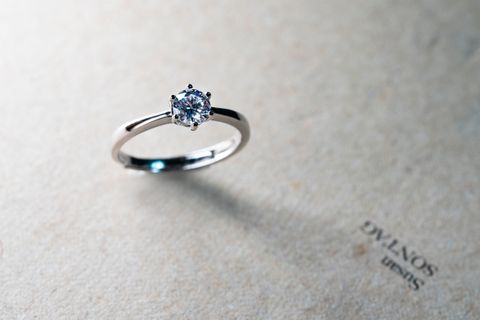
A solitaire ring features one central gemstone, usually a diamond. Its design places attention on the center stone rather than on multiple decorative elements.
Solitaire rings are available with round, oval, pear, cushion, emerald, and princess-shaped diamonds. The setting may use prongs, a bezel, or another structure to hold the stone securely.
A platinum solitaire engagement ring may suit someone who prefers a simple design with a clear focal point.
Halo Platinum Diamond Engagement Rings
A halo ring has a central gemstone surrounded by smaller stones. The surrounding diamonds create a detailed outline and can make the center stone appear more prominent.
Halo settings can be round, oval, square, or shaped to follow the outline of the central gemstone. The number and arrangement of accent stones affect the ring's appearance and maintenance requirements.
Because halo rings contain additional settings, periodic inspection is important to identify loose stones or damaged prongs.
Three-Stone Platinum Engagement Rings
Three-stone rings contain a central gemstone accompanied by two side stones. The stones may be similar in shape or arranged with a larger center stone and smaller supporting diamonds.
Some people associate the three stones with a couple's past, present, and future. This is a symbolic interpretation rather than a universal definition.
The design can create a balanced appearance while providing more opportunities to combine different diamond shapes or sizes.
Vintage-Inspired Platinum Rings
Vintage-inspired rings incorporate decorative details associated with earlier jewelry styles. These may include milgrain edges, engraved patterns, filigree, or geometric arrangements.
Platinum can support intricate settings, but fine decorative details need careful maintenance. The ring's design and construction should be assessed for comfort and suitability for regular wear.
Bezel-Set Platinum Engagement Rings
A bezel setting surrounds the gemstone's outer edge with a rim of metal. This creates a clean outline and can help protect the stone's sides from some everyday impacts.
Bezel settings are available in modern, minimalist, and traditional designs. The amount of metal surrounding the stone affects its overall appearance.
A bezel is not immune to damage, so the setting and gemstone should still be inspected periodically.
Comparing Common Ring Styles
| Ring type | Main feature | General appearance |
|---|---|---|
| Solitaire | One central gemstone | Classic and simple |
| Halo | Central stone surrounded by smaller stones | Detailed and decorative |
| Three-stone | Central gemstone with two side stones | Balanced and prominent |
| Vintage-inspired | Engraving and intricate details | Traditional and ornate |
| Bezel-set | Metal surrounds the gemstone's edge | Clean and contemporary |
| Pavé band | Small stones set along the band | Sparkling and detailed |
Platinum Engagement Ring Sets and Bridal Combinations
A platinum engagement ring set may include a single engagement ring and a matching wedding band. Coordinated sets are designed so the rings complement one another in shape, metal, and decorative details.
Platinum bridal ring sets can be simple or elaborate. Some feature two plain bands, while others combine a central diamond ring with a curved band that follows the engagement ring's shape.
Platinum Wedding Ring Sets
Platinum wedding ring sets often emphasize visual consistency. The engagement ring and wedding band may share a similar finish, band width, engraving pattern, or gemstone arrangement.
Common combinations include:
A solitaire engagement ring paired with a plain platinum band.
A halo ring accompanied by a diamond-set wedding band.
A vintage-inspired engagement ring matched with an engraved band.
A bezel-set ring combined with a smooth, minimalist wedding ring.
A curved wedding band designed to fit around a prominent center stone.
A flush fit is not possible with every ring design. Some engagement rings have settings that create a gap between the two rings. This is a design characteristic rather than necessarily a defect.
When considering a set, examine how the rings sit together, whether the edges feel comfortable, and whether the combined height is practical for everyday wear.
Platinum Engagement Rings for Women
Platinum engagement rings for women are available in a wide range of sizes, proportions, and styles. The most suitable design depends on the wearer's personal preferences rather than a fixed set of rules.
A narrow band may create a delicate appearance, while a wider band can look more substantial. A high-set diamond may create a prominent profile, whereas a lower setting can feel more streamlined.
Before deciding on a ring, consider:
Finger size and ring proportions.
Preferred diamond shape and setting.
Band width and overall weight.
Comfort during regular activities.
Compatibility with a future wedding band.
The level of detail required for routine maintenance.
Ring size can change with temperature and other everyday conditions. Accurate sizing and a comfortable fit are therefore important considerations.
Custom Platinum Engagement Rings: Design Fundamentals
Custom platinum engagement rings are designed around individual preferences instead of following only a standard ring pattern. A custom design may involve selecting a gemstone, choosing a setting, determining band proportions, and incorporating meaningful details.
The process generally begins with a clear design concept. A jeweler or designer may prepare sketches, digital models, or sample proportions before the final ring is made.
Important Custom Design Decisions
Gemstone selection: The central diamond or other gemstone influences the ring's proportions, appearance, and setting requirements.
Band profile: A band can be rounded, flat, tapered, or shaped to create a particular visual effect.
Setting height: The position of the center stone affects its profile, comfort, and exposure to impact.
Metal purity: Platinum jewelry may use different purity levels and alloy compositions. The declared fineness should be documented.
Personal details: Engraved initials, dates, or geometric elements can give the ring individual significance.
Wedding band compatibility: The engagement ring should be considered alongside the intended wedding band, especially if both are expected to sit closely together.
Custom design requires attention to structural details. A visually delicate ring may need sufficient thickness and suitable setting construction to support regular wear.
Diamond Engagement Ring Sets: Understanding the Four Cs
Diamond engagement ring sets can feature one central diamond, multiple accent stones, or matching diamonds across both the engagement ring and wedding band.
The four Cs—cut, color, clarity, and carat weight—are commonly used to describe diamond characteristics.
Cut: Describes how a diamond's proportions and facets influence its interaction with light.
Color: For conventional white diamonds, grading generally considers the degree of color present.
Clarity: Describes internal characteristics and surface features.
Carat weight: Measures the diamond's weight, not its overall quality or visual dimensions.
A diamond's appearance depends on the combination of these factors, its setting, and the lighting in which it is viewed.
Natural and Laboratory-Grown Diamonds
Natural diamonds form through geological processes, while laboratory-grown diamonds are produced using technological methods that replicate diamond-forming conditions.
Laboratory-grown diamonds have essentially the same chemical composition and crystal structure as natural diamonds, but they differ in origin. Diamond simulants, such as cubic zirconia, are different materials that imitate a diamond's appearance.
Clear descriptions and appropriate grading documentation help readers understand the identity and characteristics of the gemstone in a platinum engagement ring.
Recent Platinum Jewelry Trends and Developments
During 2025, industry reporting documented renewed global interest in platinum jewelry. A 2026 market update from CME Group discussing World Platinum Investment Council estimates reported that global platinum jewelry demand increased by approximately 7% in 2025, reaching a seven-year high. The same report anticipated a different market direction for 2026, illustrating that jewelry demand can change with regional conditions and consumer preferences. These figures describe the broader platinum jewelry market, not engagement rings alone. <Cite refs={["turn396848search7","turn396848search8"]}/>
Design Directions During 2025–2026
Several design themes remain relevant to platinum engagement jewelry:
Minimalist settings: Clean bands and simple gemstone arrangements.
Oval and elongated gemstones: Shapes that create a different visual proportion from round diamonds.
Vintage-inspired details: Engraving, milgrain edges, and decorative metalwork.
Matching bridal bands: Coordinated engagement and wedding ring combinations.
Personalized details: Engravings and designs reflecting individual preferences.
Alternative diamond origins: Greater attention to the distinction between natural and laboratory-grown diamonds.
These are broad design directions, not universal preferences or guarantees of future popularity. Individual tastes, regional traditions, and practical considerations continue to influence ring selection.
Essential Tips for Choosing and Maintaining Platinum Rings
A platinum engagement set should be evaluated for comfort, construction, material identification, and ease of maintenance.
Practical Selection Tips
Confirm the stated platinum purity and alloy composition.
Check the center diamond's description and any relevant grading report.
Examine prongs, bezels, and other gemstone settings.
Consider the band's width, thickness, and overall weight.
Check how the engagement ring fits alongside the wedding band.
Choose a comfortable profile for the wearer's daily activities.
Keep invoices, metal details, and gemstone documentation together.
Ask about suitable cleaning methods and periodic inspection.
Platinum Ring Care
Platinum can develop scratches and a patina through everyday use. Regular cleaning with an appropriate jewelry-cleaning method can help remove accumulated dirt, but abrasive products may damage the finish or gemstones.
Remove rings during activities that involve heavy impact or exposure to harsh chemicals. Store jewelry separately to reduce scratching and inspect the settings periodically for signs of movement or damage.
If a ring becomes bent or a gemstone appears loose, professional inspection can help determine whether repair is needed. Resizing and restoration methods depend on the ring's design and alloy composition.
Platinum Jewelry Rules and Consumer Protection in India
Understanding material identification and consumer protection is important when evaluating platinum engagement sets in India.
BIS Hallmarking and Platinum Purity
The Bureau of Indian Standards (BIS) operates India's hallmarking framework for precious-metal jewelry. According to BIS guidance, the metals currently covered under its hallmarking scheme are gold and silver. The mandatory gold hallmarking system should therefore not be confused with a mandatory platinum hallmarking requirement. <Cite refs={["turn396848search1","turn396848search5"]}/>
For platinum engagement rings, readers should review the stated platinum fineness, alloy information, manufacturer documentation, and any applicable independent testing or certification. A gold HUID is not a platinum purity identifier.
Consumer Protection Act, 2019
India's Consumer Protection Act, 2019, establishes a framework for consumer rights and addresses misleading advertisements and unfair trade practices. Jewelry descriptions should accurately represent the metal, gemstone identity, and relevant product characteristics.
Readers should distinguish between a metal purity declaration, a diamond grading report, and a general product description because each provides different information.
Regulatory requirements can change, so current guidance from BIS and the Department of Consumer Affairs should be checked when a specific compliance question arises.
Frequently Asked Questions
1. What is a platinum engagement ring set?
A platinum engagement ring set generally combines an engagement ring with a matching or coordinated wedding band. The rings may feature diamonds, plain platinum surfaces, engraving, or other decorative details.
2. Are platinum engagement rings suitable for everyday wear?
They can be suitable for regular wear because platinum is dense and durable. However, platinum can scratch, and gemstone settings can become loose. Regular inspection and appropriate care remain important.
3. What is the difference between platinum and white gold engagement rings?
Platinum has a naturally white appearance and is relatively dense. White gold is a gold alloy that may use rhodium plating to maintain a bright white surface. Their weight, composition, maintenance requirements, and appearance can differ.
4. How can platinum purity be verified in India?
Check the documented platinum fineness, alloy composition, and any relevant independent testing or certification. BIS's standard mandatory hallmarking framework currently covers gold and silver, so gold hallmark identifiers should not be interpreted as platinum purity marks.
5. What should be considered when choosing a diamond engagement ring set?
Consider the diamond's cut, color, clarity, and carat weight, as well as the ring's setting, metal purity, comfort, and compatibility with the wedding band. Documentation can help clarify the diamond's characteristics.
Conclusion
Platinum engagement sets combine a naturally white precious metal with a wide range of diamond settings and ring designs. Solitaire rings, halo settings, three-stone designs, vintage-inspired rings, and coordinated platinum wedding ring sets each provide different visual styles and practical characteristics.
Understanding platinum purity, diamond grading, ring construction, and maintenance helps beginners evaluate these designs more effectively. In India, clear material documentation and an accurate understanding of the applicable hallmarking framework are also important.
Ultimately, the most suitable platinum engagement ring set is one that reflects the wearer's preferences, fits comfortably, and meets the couple's expectations for design and everyday use. Attention to material quality, gemstone documentation, construction, and care can help preserve the ring's appearance and personal significance over time.

Related Post...
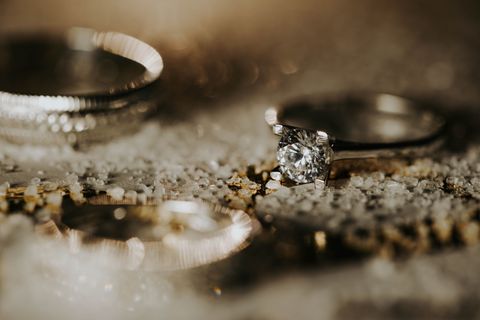
Solitaire Engagement Rings Guide: Styles, Benefits, Basics, and Buying Tips
Updated: October 22, 2026
Read More
Groom’s Cufflinks: A Complete Guide to Styles, Designs, and Essential Tips
Updated: October 23, 2026
Read More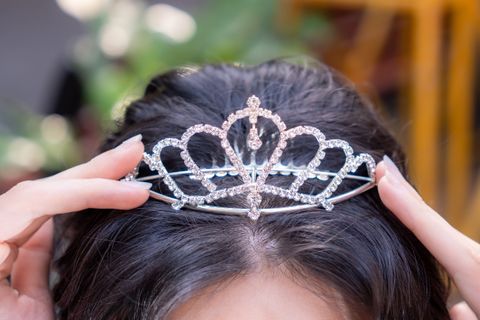
Premium Crown Guide: Essential Tips, Insights, and Advice for Choosing the Best Crown
Updated: October 23, 2026
Read More