Laser Cutting Machine Guide: Explore Types, Applications, Benefits, and Essential Insights
Laser cutting machines are advanced manufacturing systems that use concentrated laser energy to cut, shape, and process different materials with high precision. These machines are widely used in industries that require accurate dimensions, consistent results, and detailed designs.
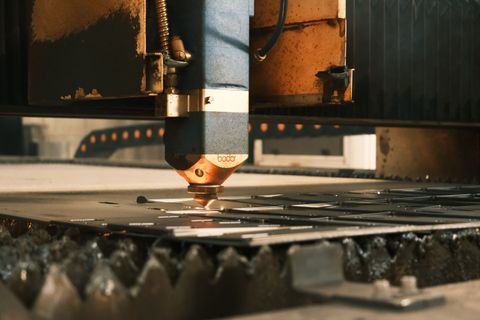
Traditional cutting methods often involve mechanical contact between a cutting tool and the material. Laser cutting works differently by directing a focused beam of light onto a specific area. The energy generated by the beam heats, melts, burns, or vaporises the material, depending on its composition and thickness.
Modern laser cutting technology is commonly integrated with computer numerical control (CNC) systems. These systems follow programmed instructions to control cutting paths, movement, speed, and other operating parameters.
A Fiber Laser Cutting Machine is one of the widely used technologies for metal processing. It is particularly suitable for cutting materials such as stainless steel, carbon steel, aluminium, brass, and copper, subject to machine specifications.
Understanding the different machine types, applications, operating principles, advantages, and technical features helps manufacturers and industrial professionals evaluate suitable laser cutting technology.
Importance of Laser Cutting Technology in Modern Industries
Laser cutting has become an important part of modern manufacturing because industries increasingly require precision, repeatability, and efficient material processing.
High cutting accuracy: Laser systems can produce detailed shapes and precise edges when configured correctly. This is useful for components with complex dimensions and design requirements.
Consistent production: CNC-controlled cutting allows machines to repeat programmed operations. This supports consistency across multiple components and production batches.
Reduced mechanical contact: Since the cutting process does not generally depend on a conventional cutting tool touching the material, mechanical tool wear associated with traditional cutting methods can be reduced.
Complex design processing: Laser technology can follow detailed cutting paths, making it suitable for intricate patterns, openings, curves, and customised components.
Material flexibility: Depending on the laser source and machine configuration, different materials can be processed, including metals, plastics, wood, textiles, and selected composites.
Manufacturing automation: Modern systems can integrate with CAD and CAM software, automated material handling equipment, and production management systems.
How Does a Laser Cutting Machine Work?
A laser cutting machine operates by generating a concentrated beam of light and directing it towards a selected material. The beam produces intense heat in a small area, allowing the material to be separated along a programmed path.
The general operating process involves several stages.
1. Laser Generation
The machine generates laser energy through a laser source. Different technologies use different methods to produce the beam.
Common laser sources include:
Fiber laser sources.
CO2 laser sources.
Crystal-based solid-state laser sources.
Other specialised laser systems.
The selected source influences the machine's material compatibility, cutting performance, maintenance requirements, and operating characteristics.
2. Beam Transmission
The generated laser beam is directed towards the cutting head. Fiber laser systems commonly transmit energy through optical fibre, while other technologies may use different beam-delivery arrangements.
3. Beam Focusing
A focusing lens concentrates the beam into a small area on the material surface. This creates the energy density required for cutting.
The quality of the focusing system influences cutting precision and edge characteristics.
4. Material Processing
When the focused beam reaches the material, it generates sufficient heat to melt, burn, or vaporise the targeted area.
An assist gas is often used to remove molten material from the cutting path. Common gases include oxygen, nitrogen, and compressed air, depending on the material and desired cutting result.
5. CNC Movement
The CNC controller guides the cutting head or worktable according to programmed instructions. The system coordinates movement along the required cutting path.
6. Finished Component
After the programmed operation is completed, the processed component is removed for inspection, finishing, or further manufacturing operations.
Types of Laser Cutting Machines
Laser cutting systems are available in different configurations. Each type has distinct characteristics based on its laser source, material compatibility, and intended application.
1. Fiber Laser Cutting Machine
A Fiber Laser Cutting Machine uses an optical fibre-based laser source to generate and transmit concentrated laser energy.
Key characteristics
Suitable for many metal-cutting applications.
High beam quality in modern systems.
Efficient energy transmission.
Compatible with CNC automation.
Commonly used for sheet metal and metal component processing.
Fiber laser technology is particularly popular in industrial metal fabrication. It can process stainless steel, mild steel, aluminium, copper, and brass, depending on the system's power and configuration.
The performance of a fiber laser cutter depends on laser output, cutting-head design, material thickness, assist gas, and operating settings.
2. CO2 Laser Cutting Machine
CO2 laser cutting machines use a gas-based laser source that generates infrared laser energy.
These machines are commonly used for processing non-metallic materials, although specialised configurations can also process certain metals.
Typical applications include:
Acrylic sheet cutting.
Wood and plywood processing.
Textile cutting.
Paper and cardboard processing.
Leather cutting.
Selected plastic materials.
CO2 technology remains relevant in industries where non-metallic material processing is a major requirement.
3. CNC Laser Cutting Machine
A CNC Laser Cutting Machine combines laser technology with computer numerical control. It follows digital instructions to control the cutting operation.
The process generally begins with a design created using computer-aided design software. The design is then converted into machine-readable instructions through a suitable manufacturing software workflow.
Important characteristics include:
Automated cutting paths.
Repeatable production operations.
Digital design integration.
Controlled movement.
Accurate component processing.
Support for complex geometric patterns.
CNC laser systems are used in industrial fabrication, automotive manufacturing, engineering, and sheet metal processing.
4. Crystal Laser Cutting Machine
Crystal laser systems use solid-state laser materials such as Nd:YAG or related crystal-based technologies.
They are used in selected industrial applications where their wavelength and operating characteristics are suitable.
Typical applications include:
Precision metal processing.
Specialised manufacturing.
Marking and engraving.
Selected cutting operations.
Processing applications requiring specific laser characteristics.
Their suitability depends on the required output, material type, and production conditions.
5. 3D Laser Cutting Machine
A 3D laser cutting machine is designed to process three-dimensional components rather than only flat sheets.
These machines may use robotic arms, multi-axis movement, or specialised cutting heads to reach different areas of a component.
Common applications include:
Automotive structural components.
Metal tubes and profiles.
Complex fabricated assemblies.
Three-dimensional metal parts.
Specialised industrial components.
They are useful when a component requires cutting along curved, angled, or multi-directional surfaces.
Applications of Industrial Laser Cutting Machines
Industrial laser cutting machines are used across a wide range of manufacturing sectors. Their ability to process different shapes and material thicknesses makes them useful in both specialised and large-scale production environments.
1. Automotive Industry
The automotive sector uses laser cutting for various metal components and structural parts.
Applications include:
Vehicle body components.
Brackets and mounting plates.
Interior metal structures.
Exhaust system components.
Sheet metal panels.
Precision automotive parts.
Laser cutting can support accurate component production and the processing of complex designs.
2. Aerospace Industry
Aerospace manufacturing requires carefully controlled production processes and accurate components.
Laser cutting technology is used for selected applications involving metal sheets, specialised alloys, and precision parts.
Applications may include:
Aircraft structural components.
Sheet metal assemblies.
Precision brackets.
Specialised metal panels.
Engineering components.
Material compatibility and strict quality requirements are important considerations in this sector.
3. Construction and Architecture
Construction and architectural manufacturing use laser cutting to create decorative and functional metal components.
Common examples include:
Decorative metal panels.
Building façade components.
Metal partitions.
Staircase components.
Structural brackets.
Custom architectural patterns.
Laser cutting allows manufacturers to process detailed designs that may be difficult to achieve through conventional cutting techniques.
4. Electrical and Electronics Manufacturing
Electrical equipment manufacturing requires accurately processed metal enclosures, panels, and supporting structures.
Laser cutting is used for:
Electrical cabinets.
Control panels.
Equipment housings.
Metal mounting plates.
Electronic enclosures.
Precision brackets.
Accurate dimensions help components fit correctly during assembly.
5. Furniture Manufacturing
Metal furniture manufacturers use laser cutting to process frames, panels, supports, and decorative elements.
Applications include:
Metal chair frames.
Table structures.
Storage racks.
Decorative screens.
Furniture brackets.
Custom metal patterns.
The technology supports both functional and decorative component production.
6. Medical Equipment Manufacturing
Laser cutting can be used in selected medical equipment manufacturing processes where precision metal components are required.
Examples include:
Instrument components.
Medical equipment enclosures.
Precision metal supports.
Selected surgical instrument parts.
Specialised equipment structures.
Medical manufacturing requires strict material, cleanliness, and quality-control procedures. Not every laser cutting system is suitable for every medical application.
7. Industrial Machinery Manufacturing
Industrial equipment manufacturers use laser cutting to process components required for machines and production systems.
Examples include:
Machine housings.
Metal brackets.
Protective covers.
Equipment panels.
Sheet metal frames.
Structural components.
The ability to process repeatable designs can support organised production workflows.
Metal Laser Cutting Machine: Materials and Capabilities
A Metal Laser Cutting Machine is designed to process metallic materials through concentrated laser energy. The results depend on material composition, thickness, laser power, cutting speed, and gas selection.
Different metals respond differently to laser energy.
Material | Common Applications | Important Considerations |
|---|---|---|
Stainless steel | Kitchen equipment, panels, machinery | Edge quality and assist gas |
Mild steel | Structural parts, brackets, frames | Material thickness and oxygen use |
Aluminium | Automotive and electrical components | Reflectivity and heat management |
Brass | Decorative and precision components | Material reflectivity |
Copper | Electrical components | High reflectivity and thermal conductivity |
Galvanised steel | Enclosures and fabrication | Coating and fume management |
Not every machine can process every material or thickness. Manufacturers should check the machine's technical specifications before planning production.
Sheet Metal Laser Cutting Machine: Features and Functions
A Sheet Metal Laser Cutting Machine is designed specifically for cutting flat metal sheets into required shapes and dimensions.
It is widely used in fabrication workshops, engineering facilities, automotive component production, and electrical equipment manufacturing.
Important Features
Working table: Supports the metal sheet during the cutting process. Its dimensions determine the maximum sheet size that can be accommodated.
Laser cutting head: Directs and focuses the laser beam onto the material.
CNC controller: Controls the machine's movements and cutting instructions.
Automatic focusing: Some systems automatically adjust the focal position according to material thickness and operating requirements.
Assist gas system: Supplies gas to the cutting area to help remove molten material and influence cutting quality.
Cooling system: Helps maintain suitable operating temperatures for the laser source and related components.
Fume extraction: Removes smoke, particles, and processing fumes from the working environment.
Common Sheet Metal Applications
Industrial cabinets.
Metal doors and panels.
Electrical enclosures.
Automotive brackets.
Machine covers.
Furniture components.
Decorative metal sheets.
Equipment mounting plates.
Benefits of Laser Cutting Machines
Laser cutting machines offer several advantages in modern manufacturing. The exact benefits depend on the technology, material, production volume, and operating conditions.
1. Precision Cutting
A focused laser beam can produce accurate cutting paths and detailed component shapes. This is useful for manufacturing parts with specific dimensional requirements.
2. Complex Design Capability
Laser cutting systems can process curves, patterns, holes, and intricate geometries based on digital designs.
3. Reduced Mechanical Tool Contact
The process does not require a conventional cutting blade to physically contact the material. This reduces certain types of mechanical tool wear.
4. Repeatable Production
CNC automation allows programmed cutting patterns to be repeated. This can support consistency across multiple production batches.
5. Material Utilisation
Nesting software can arrange multiple component designs within a sheet to improve material utilisation and reduce unnecessary leftover material.
6. Manufacturing Flexibility
A suitable machine can process different designs and components by changing digital instructions and operating settings.
7. Integration with Automation
Industrial systems can be integrated with automated loading, unloading, sorting, and production monitoring equipment.
8. Reduced Secondary Processing in Suitable Applications
Laser cutting can produce clean edges under appropriate conditions. Depending on material and cutting parameters, this may reduce the need for additional finishing operations.
Essential Factors to Consider Before Selecting a Laser Cutting Machine
Selecting an industrial laser cutting machine requires a detailed understanding of production requirements. A machine suitable for one manufacturing operation may not be appropriate for another.
1. Material Type
Identify the materials that need to be processed. Stainless steel, carbon steel, aluminium, copper, and non-metallic materials may require different laser technologies and operating configurations.
2. Material Thickness
Determine the minimum and maximum material thickness required for regular production.
Laser power and cutting performance are closely connected to material thickness. Always compare the manufacturer's recommended cutting range with actual production requirements.
3. Laser Power
Laser output is an important technical specification. Higher power can support the processing of thicker materials and higher cutting speeds in suitable applications.
However, selecting the highest available power is not always necessary. The correct configuration depends on material, thickness, production volume, and desired edge quality.
4. Working Area
The working table should accommodate the dimensions of the materials being processed.
Manufacturers should consider both current sheet sizes and expected future production requirements.
5. CNC Software Compatibility
Check whether the machine supports the required CAD and CAM workflows. Software compatibility can influence design preparation, production planning, and operational efficiency.
6. Cutting Accuracy
Review specifications related to positioning accuracy, repeatability, cutting tolerance, and edge quality.
These details are particularly important when components must fit together during assembly.
7. Cooling and Maintenance
Laser systems require suitable cooling and regular maintenance. Check the cooling arrangement, optical component requirements, filters, cutting-head maintenance, and recommended inspection schedule.
8. Automation Requirements
Some production environments require automatic loading, unloading, material storage, and sorting. Consider whether these capabilities are necessary for the intended manufacturing process.
9. Safety Systems
Industrial laser machines should include appropriate safety arrangements, such as protective enclosures, interlocks, emergency stops, fume extraction, and suitable warning systems.
Operators should receive training based on the machine's laser classification and workplace safety requirements.
10. Technical Support and Manufacturer Documentation
When evaluating a Laser Cutting Machine Manufacturer or Laser Equipment Supplier, review technical documentation, installation requirements, training arrangements, warranty conditions, spare-part availability, and maintenance guidance.
Understanding Laser Cutting Machine Price Factors
Laser Cutting Machine Price varies significantly according to technical specifications, machine configuration, manufacturing standards, and intended applications.
There is no single price that applies to every laser cutting machine. Different systems may have substantially different capabilities and operating requirements.
Important factors influencing machine pricing include:
Laser power: Higher-output laser sources can influence the overall machine price.
Working area: Larger cutting tables and machine structures may increase equipment requirements.
Laser source: Fiber, CO2, and other laser technologies have different components and configurations.
CNC system: Controller capabilities, software compatibility, and automation features influence machine specifications.
Cutting head: Advanced focusing and monitoring features may affect the overall equipment configuration.
Automation: Automatic loading, unloading, and storage systems can add complexity.
Brand and manufacturing standards: Component quality, engineering, and machine construction may influence pricing.
Installation and training: Site preparation, commissioning, and operator training may be included in the overall equipment arrangement.
Maintenance requirements: Consumables, spare parts, cooling systems, and routine maintenance contribute to long-term operational expenditure.
When comparing quotations, manufacturers should examine the complete technical specification rather than focusing only on the initial equipment price.
Role of Laser Cutter Suppliers and Manufacturers
Laser Cutter Suppliers and Laser Equipment Suppliers play an important role in helping industrial organisations understand available machine configurations.
A Laser Cutting Machine Manufacturer may provide equipment designed for specific materials, production requirements, and industrial applications.
When evaluating manufacturers or suppliers, consider the following factors:
Technical specifications: Review laser power, cutting capacity, working area, positioning accuracy, and supported materials.
Documentation: Check operating manuals, installation requirements, safety information, and maintenance instructions.
Machine demonstration: A demonstration using the intended material and thickness can help evaluate practical cutting performance.
Component information: Review the laser source, cutting head, controller, cooling system, and other major components.
Training arrangements: Operators should understand machine controls, material settings, routine inspections, and emergency procedures.
Maintenance support: Review spare-part availability, maintenance schedules, and technical assistance arrangements.
Industry experience: Relevant experience in similar manufacturing applications can help when evaluating a supplier's technical understanding.
A structured comparison can help manufacturers identify equipment that aligns with their actual production requirements.
Safety Guidelines for Operating Laser Cutting Machines
Laser cutting machines involve high-energy laser radiation, heat, electrical systems, moving components, and potentially hazardous fumes. Appropriate safety procedures are essential.
Important safety practices include:
Operate equipment only after receiving suitable training.
Follow the manufacturer's operating instructions.
Use protective enclosures and safety interlocks.
Never bypass safety mechanisms.
Maintain effective fume extraction and ventilation.
Use suitable protective equipment when required.
Keep combustible materials away from the processing area.
Inspect electrical connections and cooling systems regularly.
Follow approved procedures for handling gas cylinders.
Keep emergency stop controls accessible.
Inspect processed materials for sharp edges and hot surfaces.
Some materials can release hazardous fumes when exposed to laser energy. Operators should verify material compatibility and follow workplace safety guidance before processing unfamiliar substances.
Recent Updates and Trends in Laser Cutting Technology (2025–2026)
Laser cutting technology continues to evolve as manufacturers focus on automation, precision, energy management, and connected production systems.
Higher-power fiber laser systems: Industrial equipment development continues to include higher-output fiber laser configurations designed for demanding metal-processing applications. Actual cutting performance depends on material thickness and machine design.
AI-assisted monitoring: Intelligent monitoring and software-based analysis are increasingly relevant to identifying cutting irregularities, monitoring equipment conditions, and improving production planning.
Automated material handling: Loading, unloading, storage, and sorting systems are becoming important parts of integrated sheet metal production environments.
Smart manufacturing integration: CNC machines can be connected with digital production systems to support workflow monitoring, production scheduling, and equipment performance analysis.
Improved cutting-head technology: Developments in focusing, height sensing, and process monitoring aim to support stable cutting operations.
Energy efficiency: Manufacturers continue to focus on equipment efficiency, cooling arrangements, and operating practices that can reduce unnecessary energy consumption.
Digital design workflows: CAD, CAM, nesting software, and machine-control systems help connect product design with industrial manufacturing.
These trends represent broad technology developments rather than guaranteed features in every machine. Equipment specifications should always be checked individually.
Laws, Standards, and Industrial Safety Policies in India
Industrial laser cutting equipment used in India must be considered within the country's applicable workplace safety, electrical safety, environmental, and industrial regulations.
Factories Act, 1948 and applicable state rules: The traditional framework established provisions concerning workplace health, safety, and welfare. Businesses should also check the current applicability of the Occupational Safety, Health and Working Conditions Code, 2020, and related implementation notifications.
Occupational safety requirements: Employers should establish appropriate workplace procedures for machine operation, worker training, equipment maintenance, ventilation, and emergency response.
Environment Protection Act, 1986: Environmental requirements may apply to industrial operations, including the management of emissions and other environmental impacts.
Air (Prevention and Control of Pollution) Act, 1981: Applicable requirements concerning air pollution control and industrial emissions should be reviewed with the relevant State Pollution Control Board.
Electrical safety: Laser cutting machines require suitable electrical installation, grounding, protection systems, and maintenance procedures.
BIS standards: Applicable Indian Standards may be relevant to electrical equipment, industrial machinery, and safety components. The specific standards should be checked according to the machine and application.
Import and product compliance: Organisations importing equipment should review applicable customs, product compliance, and other regulatory requirements.
Regulatory requirements can depend on the industry, facility, machine configuration, and state. Businesses should verify current rules with the appropriate authorities before installation and operation.
Frequently Asked Questions (FAQs)
1. What is a Fiber Laser Cutting Machine?
A Fiber Laser Cutting Machine uses an optical fibre-based laser source to generate concentrated laser energy for cutting materials. It is widely used for metal processing, including stainless steel, carbon steel, aluminium, and other compatible metals.
2. What is the difference between a CNC Laser Cutting Machine and a conventional laser cutter?
A CNC laser cutting machine uses computer numerical control to guide the cutting process according to programmed instructions. CNC automation supports repeatable operations, controlled movement, and digital design integration.
3. Which materials can an Industrial Laser Cutting Machine process?
Depending on its laser source and configuration, an industrial laser cutting machine may process stainless steel, mild steel, aluminium, copper, brass, acrylic, wood, textiles, and selected plastics.
4. What factors influence Laser Cutting Machine Price?
Laser power, machine size, laser source, CNC controller, cutting head, automation features, manufacturing standards, installation, and maintenance requirements all influence the overall price.
5. What is a Sheet Metal Laser Cutting Machine used for?
It is used to cut flat metal sheets into specific shapes and dimensions. Common applications include electrical enclosures, automotive components, machine panels, metal furniture, and industrial brackets.
6. How should manufacturers evaluate Laser Cutter Suppliers?
Manufacturers should compare technical specifications, machine demonstrations, documentation, component quality, training arrangements, spare-part availability, and maintenance support.
7. Are fiber laser cutting machines suitable for all metals?
No. Fiber lasers can process many metals, but performance depends on reflectivity, thickness, laser power, machine configuration, and cutting parameters. Compatibility should be confirmed before processing a particular material.
Conclusion
Laser cutting machines have become important tools in modern manufacturing because they support precise material processing, complex designs, and automated production workflows. Different technologies, including fiber laser, CO2, CNC-controlled, crystal-based, and 3D laser systems, serve different industrial requirements.
A Fiber Laser Cutting Machine is particularly relevant to metal fabrication, while CO2 systems are commonly used for selected non-metallic materials. Industrial applications extend across automotive, aerospace, construction, electronics, furniture, medical equipment, and machinery manufacturing.
Before selecting equipment, manufacturers should evaluate material compatibility, thickness requirements, laser power, working area, cutting accuracy, automation, maintenance, and safety features. Understanding Laser Cutting Machine Price factors and comparing technical specifications from manufacturers and suppliers can also support a more informed equipment assessment.
As automation, digital manufacturing, and intelligent monitoring continue to develop, laser cutting technology is expected to remain an important part of modern industrial production.

Related Post...

Classic Solitaire Engagement Rings Guide: Explore Timeless Designs, Styles, and Essential Tips
Updated: November 23, 2026
Read More
Laser Cutting Machine Guide: Explore Types, Applications, Benefits, and Essential Insights
Updated: November 23, 2026
Read More
Face Trimmer Overview: Discover Different Types, Uses, and Helpful Grooming Advice
Updated: November 23, 2026
Read More